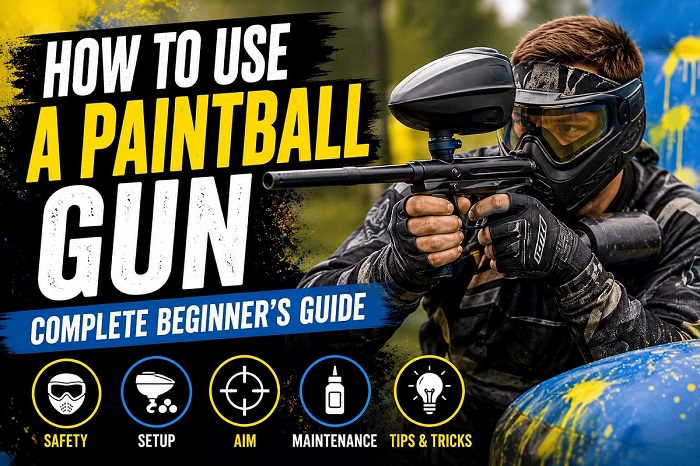

Paintball is one of the most exciting outdoor sports, combining strategy, teamwork, and fast-paced action. Whether you’re playing recreationally with friends or competing in tournaments, knowing how to use a paintball gun correctly is essential for safety, accuracy, and overall performance.
In this guide, you’ll learn everything you need to know about using a paintball gun—from understanding its parts to loading, firing, maintaining, and improving your shooting skills.
What Is a Paintball Gun?
A paintball gun, commonly called a paintball marker, is a device designed to shoot gelatin capsules filled with water-soluble paint. These paintballs are propelled using compressed air, CO₂, or nitrogen.
Unlike firearms, paintball markers are designed specifically for recreational and competitive sports, but they should always be handled responsibly.
Parts of a Paintball Gun
Before using a paintball marker, familiarize yourself with its main components.
Hopper (Loader)
The hopper stores paintballs and feeds them into the marker.
There are two common types:
- Gravity-fed hopper
- Electronic hopper
Electronic hoppers feed paintballs much faster and are ideal for competitive play.
Barrel
The barrel guides the paintball toward the target.
Longer barrels don’t necessarily increase accuracy, but high-quality barrels can improve shot consistency.
Trigger
The trigger releases the firing mechanism.
Depending on the marker, it may support:
- Semi-automatic firing
- Burst firing
- Electronic firing modes
Air Tank
The air tank powers the marker.
Common options include:
- CO₂ tanks
- High-Pressure Air (HPA)
- Compressed Nitrogen
Most experienced players prefer HPA because it offers more consistent performance.
Bolt
The bolt pushes the paintball into the barrel before compressed air launches it.
Safety Switch
Always engage the safety whenever you’re not actively shooting.
This is one of the most important safety features.
Essential Safety Equipment
Never use a paintball gun without proper protective gear.
Essential equipment includes:
- Full-face paintball mask
- Goggles
- Neck protector
- Gloves
- Chest protector
- Elbow pads
- Knee pads
- Long sleeves
- Long pants
- Closed-toe shoes
Safety should always come before performance.
Step 1: Prepare Your Paintball Gun
Before heading onto the field:
- Inspect the marker
- Check for loose screws
- Ensure the barrel is clean
- Verify the safety is on
- Make sure the air tank is not leaking
Never point the marker at anyone during setup.
Step 2: Attach the Air Tank
Carefully screw the air tank into the ASA (Air Source Adapter).
Do not overtighten.
Once connected:
- Listen for leaks
- Check the pressure gauge
- Confirm proper airflow
If you hear hissing, disconnect the tank and inspect the O-ring.
Step 3: Load Paintballs
Open the hopper lid.
Fill it with quality paintballs.
Avoid:
- Overfilling
- Cracked paintballs
- Wet paintballs
Damaged paintballs can break inside the marker and cause jams.
Step 4: Remove the Barrel Cover
Before entering the field:
- Put on your mask
- Confirm the playing area is safe
- Remove the barrel sock or barrel plug
Never remove the barrel cover outside designated playing areas.
Step 5: Turn Off the Safety
Once you’re ready to play:
- Hold the marker correctly.
- Point it downrange.
- Switch the safety off.
Keep your finger off the trigger until you’re ready to fire.
Step 6: Aim Properly
Good aim comes from proper body positioning.
Follow these tips:
- Keep both hands on the marker.
- Shoulder the marker comfortably.
- Look straight down the barrel.
- Stay balanced.
- Keep your elbows relaxed.
Avoid jerky movements.
Step 7: Fire the Paintball Gun
Gently squeeze the trigger.
Do not yank it.
Watch where the paintball lands.
Adjust your aim as needed.
Most fields limit marker velocity to approximately 280–300 feet per second (FPS) for safety, so always have your marker checked with a chronograph before play.
Step 8: Reload During Play
When your hopper gets low:
- Move behind cover.
- Open the hopper carefully.
- Add fresh paintballs.
- Close the lid securely.
Avoid spilling paintballs onto the ground.
Basic Shooting Techniques
Snap Shooting
Quickly expose yourself, fire one or two shots, then move back behind cover.
Ideal for minimizing exposure.
Lane Shooting
Fire repeatedly into likely enemy movement paths.
Common in tournament paintball.
Running and Shooting
Practice moving while maintaining accuracy.
Keep your knees bent for better stability.
Cover Shooting
Always use bunkers, trees, or obstacles.
Expose only a small portion of your body while shooting.
Common Beginner Mistakes
Avoid these mistakes:
Forgetting the Safety
Always engage the safety when you’re not actively playing.
Overfilling the Hopper
Too many paintballs can cause feeding problems.
Poor Trigger Control
Rapidly slapping the trigger often reduces accuracy.
Controlled shots are usually more effective.
Ignoring Air Levels
Running out of air during a match can leave you unable to shoot.
Monitor your tank pressure between games.
Standing Still
Paintball rewards movement.
Keep changing positions to avoid becoming an easy target.
Cleaning Your Paintball Gun
Cleaning after every game extends the life of your marker.
Exterior Cleaning
Use a microfiber cloth to wipe away:
- Dirt
- Paint
- Dust
Barrel Cleaning
Run a barrel swab or squeegee through the barrel after each game or whenever a paintball breaks inside.
A clean barrel improves consistency.
Bolt Maintenance
Follow the manufacturer’s instructions for cleaning and lubricating the bolt assembly.
Use only paintball-specific lubricants.
Hopper Cleaning
Remove broken paint.
Wash the hopper with warm water if necessary.
Allow it to dry completely before use.
Storage Tips
Proper storage keeps your equipment in excellent condition.
Always:
- Remove the air tank if recommended by the manufacturer.
- Empty remaining paintballs from the hopper.
- Store paintballs in a cool, dry place.
- Keep the marker clean and dry.
- Store it in a protective case.
Avoid leaving paintballs in the marker for extended periods.
Tips to Improve Accuracy
Improve your shooting skills by:
- Using high-quality paintballs
- Keeping your barrel clean
- Practicing trigger control
- Learning proper body positioning
- Shooting in short, controlled bursts
- Playing regularly
- Adjusting your sight picture through experience
Remember that consistency matters more than firing as fast as possible.
Paintball Gun Maintenance Checklist
After each game:
- Clean the barrel.
- Wipe down the marker.
- Inspect O-rings.
- Check for leaks.
- Lubricate moving parts as recommended.
- Empty the hopper.
- Store equipment properly.
Regular maintenance reduces malfunctions and extends the life of your gear.
Frequently Asked Questions
Can beginners use any paintball gun?
Yes. Many beginner-friendly markers are easy to operate and maintain. Mechanical markers are often recommended because they’re durable and simple to use.
Is CO₂ or HPA better?
High-Pressure Air (HPA) generally provides more consistent performance and is widely preferred by experienced players. CO₂ can still be suitable for casual play where HPA fills aren’t available.
How far can a paintball gun shoot accurately?
While a paintball can travel much farther, practical accuracy is typically around 80–100 feet (24–30 meters), depending on the marker, paint quality, weather conditions, and player skill.
Do paintball guns require maintenance?
Yes. Cleaning and inspecting your marker after each day of play helps prevent jams, air leaks, and premature wear.
Can you reuse paintballs?
No. Once a paintball has been fired or damaged, it should not be reused.
Final Thoughts
Learning how to use a paintball gun is about more than simply pulling the trigger. Safe handling, proper setup, regular maintenance, and good shooting techniques all contribute to a better experience on the field. By understanding your marker, using quality equipment, and practicing consistently, you’ll improve your accuracy, reduce equipment issues, and enjoy the game with greater confidence.
Whether you’re buying your first paintball marker or upgrading your gear, investing in reliable accessories—such as a quality mask, air tank, hopper, barrel swab, and protective equipment—can make a noticeable difference in both performance and safety. As your skills develop, maintaining your equipment and following field rules will help ensure every match is enjoyable and safe.